
By Kurt Hill
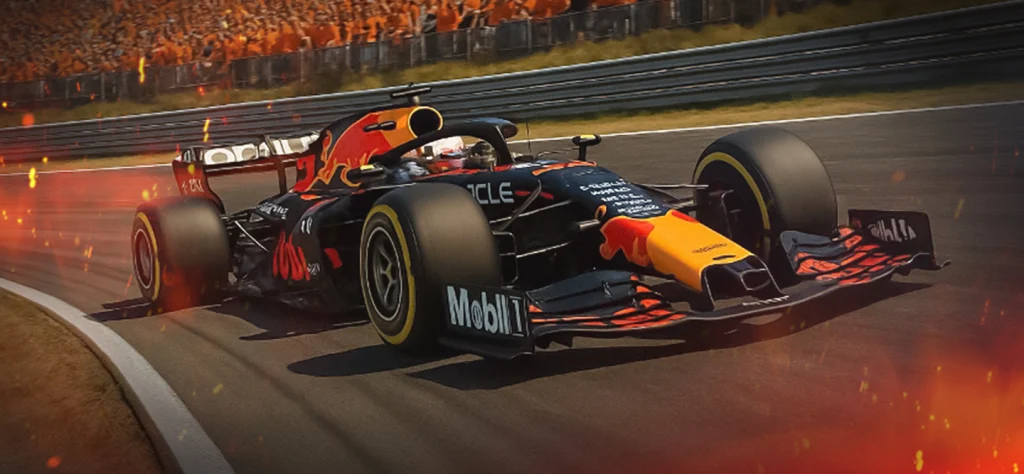
There’s all sorts of talk around the future of the Formula 1 Dutch Grand Prix. Its future is uncertain, what with the lack of confirmation of an extension or any kind of government support. It seems like Max Verstappen’s home turf might be gone for a while, if not permanently, after next season.
While fans rave about the event’s atmosphere (and of course Verstappen-mania), drivers know there’s more Zandvoort than meets the eyes. Let’s take a closer look at why this track is so unique from a driver’s perspective – and why mastering it is anything but straightforward.
The Physics of the Sand: The Invisible Enemy
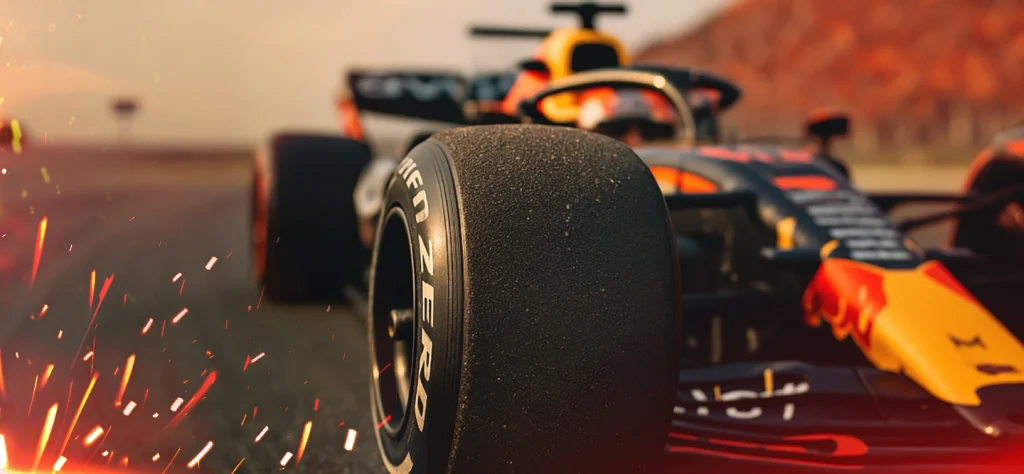
Everyone talks about the circuit’s banked corners, but the real enemy? The sand. Zandvoort’s coastal location means a fine, almost invisible layer of sand is constantly blowing onto the track. The name translates to “sand ford,” after all. Usually, most adverse track conditions like rain are highly visible. But sand is a silent assassin that turns even the most grippy and abrasive circuit into an ice rink.
This is where the differences between a racing driver and the average person become clear. Your conscious brain processes information and makes decisions far too slowly to react to a sudden loss of grip. A driver’s brain, meanwhile, operates in a “flow state” where they rely on their subconscious. They’ve trained over millions of micro-actions, thousands of laps, to process and respond to information almost instantly.
The sand isn’t an obstacle they see and then react to. It’s a subtle change in the car’s behaviour, a tiny vibration through the steering wheel, a different sound from the tires, a minuscule shift in the car. The driver’s subconscious registers and corrects for it, all before their conscious mind even registers there was a problem.
This isn’t just about speed; it’s about a highly trained form of intuition. A driver doesn’t just drive; they feel how the car moves across the track. At Zandvoort, the sand introduces a new, erratic element into that conversation. It’s a test of a driver’s mental discipline to stay in that subconscious loop and not let their conscious brain interfere. The best drivers, like Piastri, are so meticulous in their approach that they free their conscious minds to deal with the strategic, high-level decisions or even radio conversations. This then leaves the moment-to-moment car control to their perfectly honed subconscious.
Real Old-School Circuit: A Return to Consequences
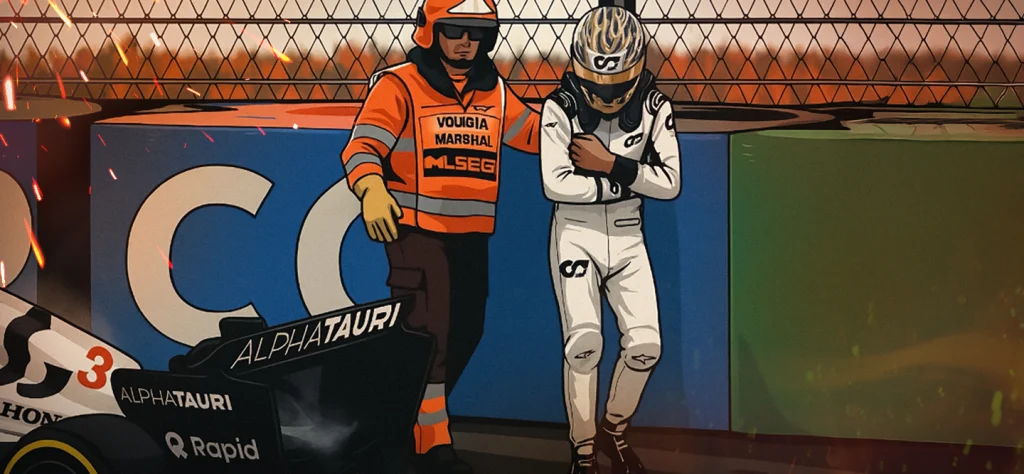
Many modern F1 tracks easily forgive mistakes meaning there is no real price to running off the track. Those for and against tracks like these have their points, to be sure. But at the end of the day, we don’t go ahead and lower tennis nets or make football goals wider. With this in mind I definitely welcome a return to circuits like Zandvoort with high punishment for running off.
We need only look at Ricciardo in 2023, who paid the highest price for running off seen in a while. With only a broken wrist to show following his trip to the barrier that year, it marked the beginning of the end of his F1 career.
With such as high price for running off and making a mistake, how does this change a driver’s approach for an event? Probably not at all. Close walls and gravel run offs punish drivers for the slightest error, sure. But pay too much attention to them, and you’ll be the one that winds up in it. Drivers try to get the maximum possible out of the car at any given track. They do this regardless of walls, gravel, or asphalt on the edge of the circuit. Each corner has a fastest possible speed – these hazards don’t change that.
This ties into my last point, too. The drivers with the most robust systems for driving a car tend to do better at tracks like Zandvoort. In many cases, these tracks are just as intense (if not more so) than your typical street circuit. That’s because you’re facing similar features in a track with much higher-speed corners than you’d find in Monaco or Singapore. Modern tracks with asphalt run off leave room for ambiguity. Optimal speed can vary. Zandvoort, meanwhile, imposes a clear physical limit.
So those who approach each track the same and with robust driving systems will outperform this who don’t. It’s crucial to take weather, track surface, and the car’s response to these into consideration when preparing for each track. However, the presence of walls and gravel does not affect this at all.
The Relentless Rhythm: No Rest, No Mercy
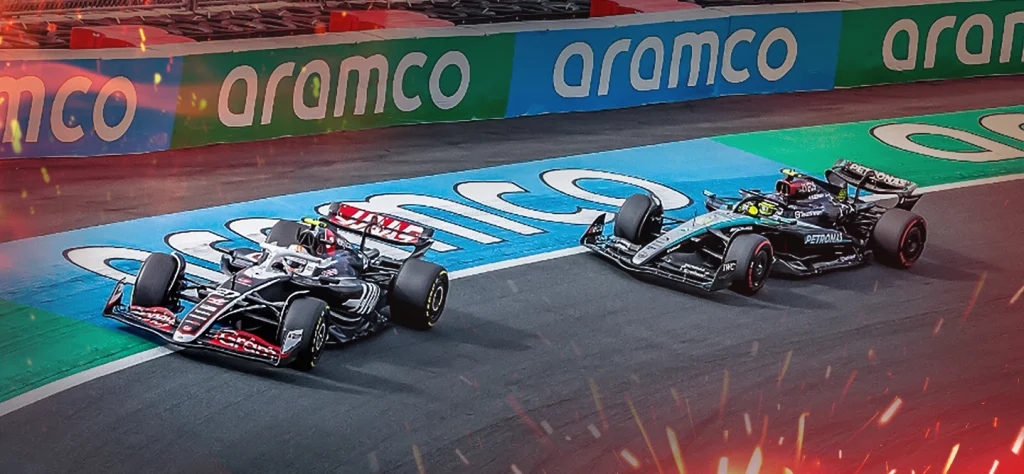
I mentioned above that this track features street circuit-level intensity, but how? One of the biggest reasons is the onslaught of corners. While there are tracks with more corners on them, Zandvoort presents a few unique challenges which turns up the heat. The barrage of corners through the lap are mostly medium to high-speed corners, making it a fairly physical track. Drivers are constantly manipulating the pedals and the wheel with little break in between. Even though they do this without thinking, it still takes a massive mental load to navigate this type of track. Although the majority of a drivers lap time is usually made up in slower corners, this intensity is really what sets each driver apart.
The track is also quite small which means multiple corners flow together in large sections often referred to as complexes. These turn complexes also reward the driver with a highly tuned and robust system, as a mistake here is not just punished in one turn, but through multiple turns. With little rest between corners one mistake has the potential to throw out a whole lap, not just a single corner.
The track also mixes in a whole bunch of less common characteristics all in one place. Drivers at the Dutch Grand Prix have to deal with off camber turns, these are turns that lean away from the direction of the track, rather than lean into it. On the same lap they also deal with banked turns, and while banked turns aren’t too much of a hassle, these ones are different. The banking angle on the Zandvoort turns increases as it rises, which offers another less common challenge.
Many tracks bring a physical challenge, and many also bring a mental challenge, but few bring both together.
The Dutch Grand Prix, Truly Unique On And Off Track
So, as we watch the (hopefully not) second-to-last Dutch Grand Prix, we won’t just be watching a race for a win. We’ll be witnessing a battle of highly tuned systems against a truly relentless track. It’s a place where invisible forces and high-stakes consequences test every single aspect of a driver’s mental and physical game. With its future on the calendar uncertain and no government support, the sport will be losing one of its most unique challenges if it’s gone for good.
Kurt Hill is a professional racing driver from Sydney, with years of experience competing on national and international circuits. His performance in Asian Formula Renault has established him as one of Asia’s top drivers. Kurt’s bringing his experience, insight, and passion for racing to Ignition to give you an unfiltered, real driver’s take on the world of F1 and motorsports.