

Everybody makes mistakes when they start to learn how to play poker. But while some missteps are inevitable, many can be avoided, as long as you have the know-how.
That’s where this guide comes in. In it, you’ll explore the easiest leaks that could affect you as you learn how to play poker.
More importantly, you’ll get the quick and simple fixes to these errors. That way, you can improve your strategy, make more informed decisions, and manage your chips more effectively.
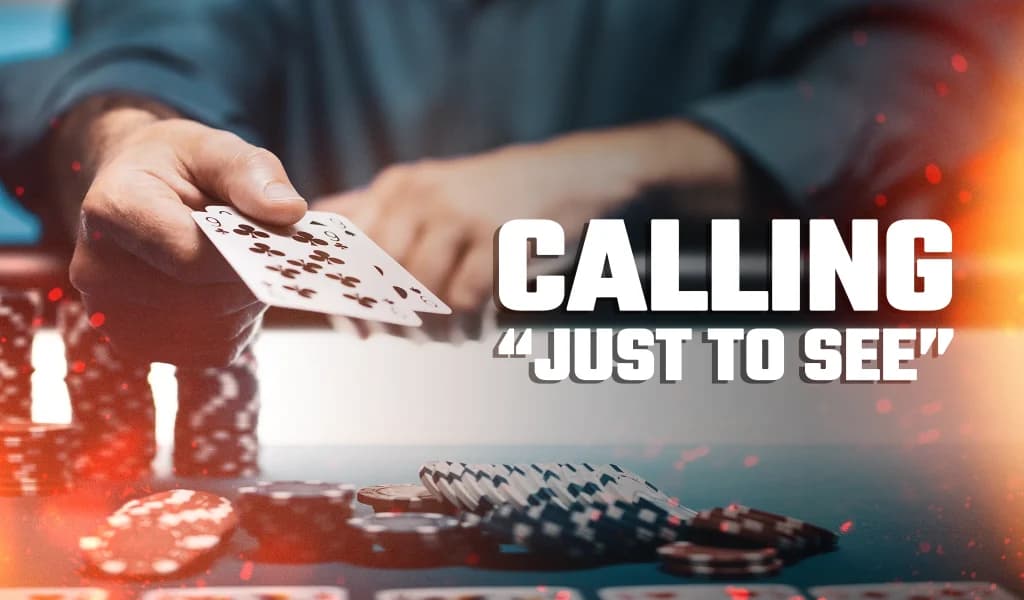
Calling “Just to See”
It can be tempting to match an opponent’s bet to stay in the game and see what happens. Maybe you’re feeling lucky, despite having a mid-strength hand. Maybe curiosity or the fear of missing out (FOMO) is getting the best of you.
Whatever your motivation, calling “just to see” can cost you.
This is what’s known as a passive play; you’re not making your own moves, you’re simply going along with your opponents’ actions. That passivity is often seen as a sign of weakness in your playstyle, your hand, or both. Experienced players can exploit that by placing big bets (knowing you’ll call), then defeating you with a stronger hand or a clever bluff.
The Fix
Adapt your strategy round-by-round.
Say you have a weak hand (e.g., unsuited cards or low-rank values) with little chance of improvement. As a beginner, your best option to protect your stack is to fold. Remember: even if you’re out of the round, you can still see what happens. Stick around to observe the rest of the game, see who wins, and use these insights to adjust your strategy for future rounds.
As you build your confidence, you can try calling with low-quality hands and outwitting your opponents with a bluff. Switching up your strategy in this way will make you harder to read and to beat.
Playing Too Many Hands
Early in your poker journey, you shouldn’t play every single round. With that said, it’s a lesson that many new players have to learn the hard way.
Much like calling “just to see”, playing every round makes you predictable. Statistically speaking, you’re not always going to have a winning hand; you’ll often hold low-quality or outright losing hands. And nobody knows that better than advanced players.
Once they detect your eagerness to stay involved, they’ll widen their range and pressure you with raises. From there, you’ll start bleeding chips in rounds that you could have simply bowed out of.
The Fix
Tighten up your play from the very beginning.
Assess the strength of your starting hand to determine your next move. For example, if you score a high-potential hand (e.g., a high pair or a couple of Broadway cards), take that as a green light.
As for weaker hands? Fold. In the early days, at least. As you gain experience, you can introduce riskier plays like raising or bluffing.
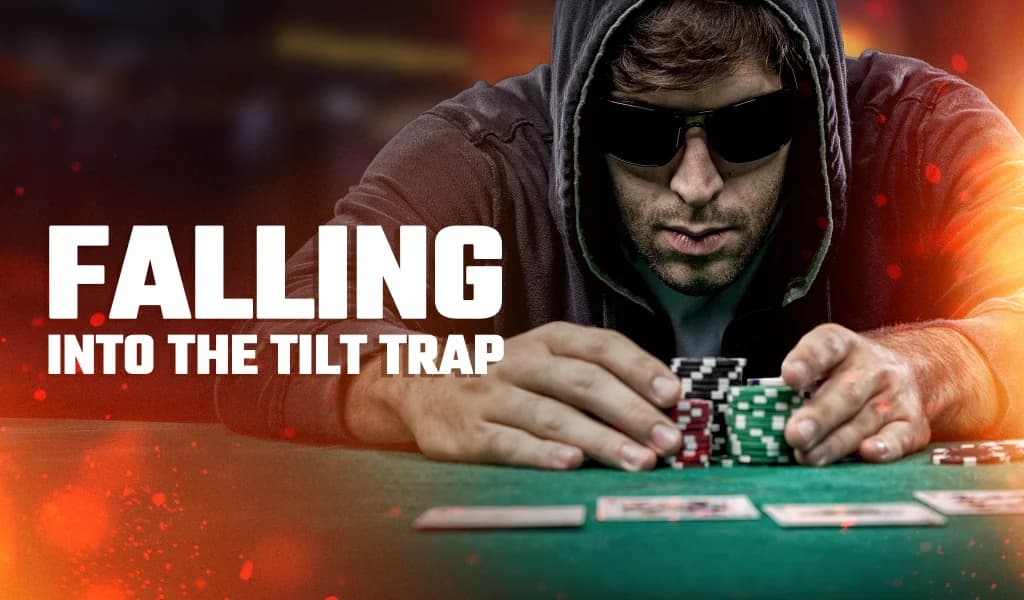
Falling Into the Tilt Trap
At the poker table, emotions can run high. Whether you’ve just won a massive prize pot or suffered a bad beat, it can be tough to keep your feelings under control.
But emotional regulation is a learned skill. One that’s crucial to master as early as possible in your poker career. If you don’t, you run the risk of falling victim to tilt.
Tilt is a state of extreme emotional frustration, typically triggered by a bad beat or string of losses. Those feelings can then lead you to make misguided or even reckless decisions on the felt. Over time, those choices will burn through your chips and spoil your fun.
The Fix
Before you play a single round, put a stop loss in place. A stop loss is a self-imposed limit that determines how much you’re willing to risk in a session. With that said, it’s not enough to simply set a stop loss; you have to stick to it. A key part of learning how to play poker is mastering that sense of discipline.
It’s also a good idea to take periodic breaks, especially during long games or if you’re starting to feel agitated. Stepping back from the table, stretching your legs, and taking a few deep breaths can help regulate your emotions. After a while, you can come back to the game with a clearer mind and a stronger strategy.
Ignoring Position
As a beginner, you may think that your seat at the table has no impact on your gameplay. But it makes a world of difference.
Your position significantly affects your strategic advantage. In general, there are three position categories in five-card poker: early, middle, and late. Players in late position have the strongest competitive edge, followed by middle-position players, and then early-position players.
If you’re in a late position, you have the luxury of seeing everyone else’s decisions before making a move yourself. Those moves can tell you a lot about what your opponents are holding and empower you to make smarter decisions.
But many new players overlook the nuances of position. Instead, they play each hand the same way regardless of where they’re sitting. The end result: they lose to savvy competitors and drain their bankroll.
The Fix
Treat your position like what it is: a core element of your overall poker strategy. Use your seat at the table to inform your decisions.
As a general rule of thumb, play tight in early position (e.g., only call with strong hands, such as high pairs or Broadway combinations).
In middle position, you can loosen up slightly (e.g., call or raise with mid-strength hands, such as suited or connected cards).
In late position, you can get a bit riskier. Play more hands, even weaker ones such as low pairs or unsuited connectors. It’s also easier to pull off a bluff in this position; you’ve already seen how everyone else acted and can exploit any signs of weakness.
Patch the Leak, Conquer the Game
By reading this guide, you’ve taken the first step in overcoming these mistakes: knowing they exist in the first place.
Even better, you’ve learned some tips and tactics for avoiding these pitfalls entirely.
Now, it’s time to apply that knowledge and patch those leaks. In doing so, you’ll level up your strategy, protect your chips, and preserve your competitive edge.