
There are few things in poker that match the frustration of a bad beat: the moment when a statistically strong hand loses to an opponent’s weaker hand.
In these scenarios, it looks and feels like everything is going your way, only for a twist of fate to pull the rug out from under you.
Bad beats are disorienting and (annoyingly) common. You’re going to encounter them plenty during any session, so it’s best to prepare yourself for what you’re facing.
3 Famous Examples of Bad Beats in Poker
Few bad beats have changed the face of poker like these three:
1. Phil Ivey vs Chris Moneymaker
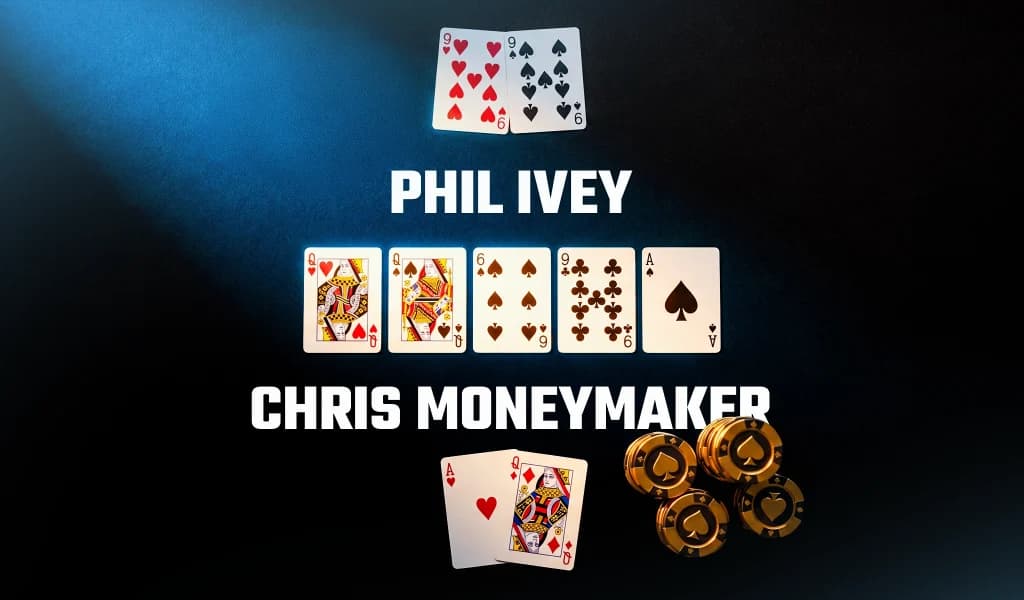
At the 2003 World Series of Poker (WSOP) Main Event, it was the veteran Moneymaker against up-and-comer Ivey. Moneymaker started with A♥ Q♦ hole cards, while Ivey held 9♥ 9♠. The flop revealed Q♥ Q♠ 6♠, initially tilting the odds in Moneymaker’s favour (i.e. three of a kind vs Ivey’s two pairs).
But when the turn appeared as a 9♣, Ivey scored a full house — all but securing him the win.
That is, until the river card was turned: A♠. The room erupted at Moneymaker’s left-field victory, which saw him walk away with $2.5 million in prize money. While Ivey went on to become one of the most successful poker players in history, the match remains one of the most memorable of his career.
The takeaway tactic: In hindsight, Ivey admits that he should have folded on the flop. But in a conversation with fellow poker legend Barry Greenstein, Ivey said that he likes to focus more on the future than the past, viewing these matches as data rather than disappointments. And that’s a mindset that every poker player should learn from.
So keep that in mind when you face a bad beat. Review the hand with curiosity, not regret. Acknowledge what you could have done differently and use that to inform your strategy for future games.
2. Justin Phillips vs Motoyuki Mabuchi
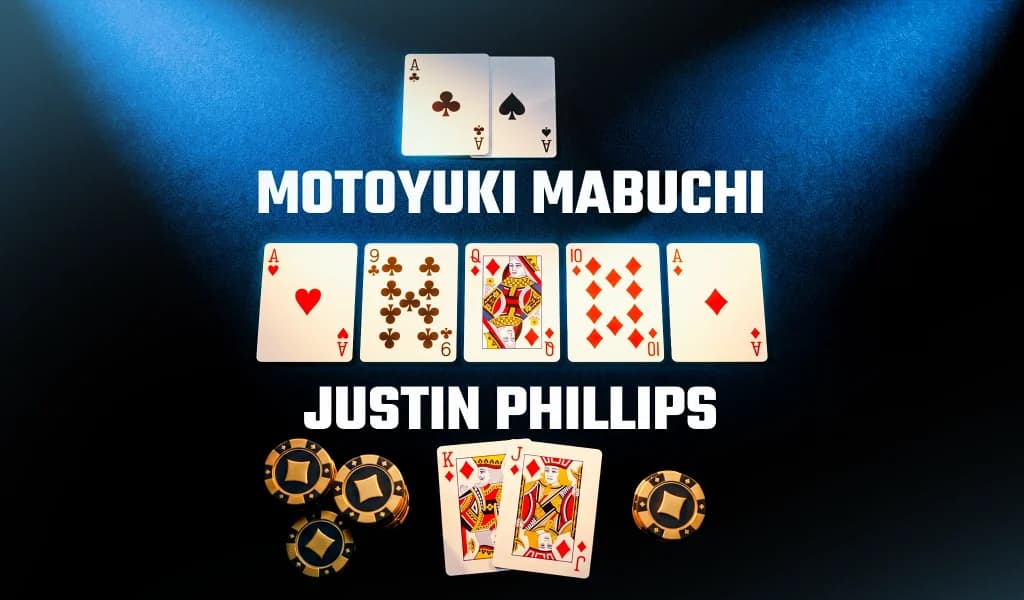
Another infamous bad beat took place at the same event five years later. The board was a hefty one, showing A♥ 9♣ Q♦ 10♦ A♦, and two players remained in the showdown: Phillips and Mabuchi.
In a wildly bold move, Mabuchi splashed all his chips on the table, going all in. Without hesitation, Phillips called. And once they showed their cards, it was clear to see where each player’s confidence came from.
Mabuchi held A♣ A♠, giving him the highest possible four of a kind. By any standards, it was an exceptional hand. And in poker hand rankings, there are only two others that could beat it: a royal flush or a straight flush.
Lo and behold, Phillips revealed K♦ J♦ — the makings of a royal flush, the strongest hand in the game of poker.
According to ESPN, the odds of this outcome are one in 2.7 billion hands, making it one of the unlikeliest bad beats in history.
The takeaway tactic: When the odds are this astronomical, you may not be able to control the result —but you can control your reaction. Like Mabuchi, you could play your hand perfectly and still lose.
But the lesson is to anchor your confidence in the decisions you make, not the cards you’re dealt. If your logic is sound, your ranges are disciplined, and your read is correct, then a one-in-billions river card doesn’t diminish the quality of your play.
3. Josh Arieh vs Bryce Yockey
In the words of poker commentator Nick Schulman, the 2019 WSOP Poker Players’ Championship brought about “the beat to end all beats”.
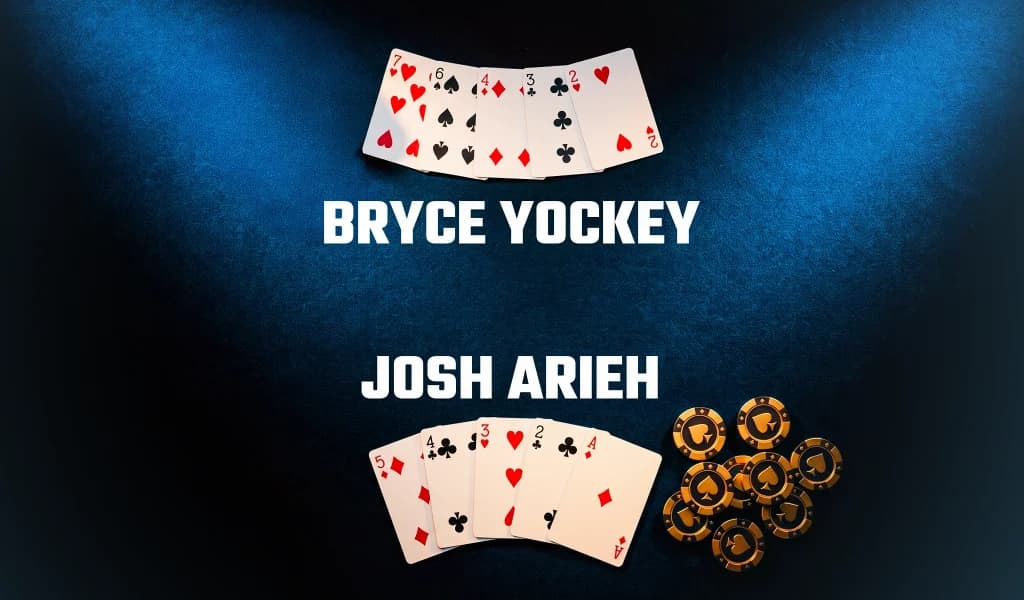
Yockey was basically a shoo-in with a 7-6 low hand that had a roughly 99% chance of winning the pot. The only way for Arieh to defeat him was to score the best possible low hand, known as a “wheel” (A‑2‑3‑4‑5).
And that’s exactly what happened on Arieh’s final draw, beating Yockey’s hand and leaving him gobsmacked.
The takeaway tactic: Play every street as if your opponent still has a shot — even the hands where you’re nearly guaranteed to win. Protect your equity, avoid giving free cards, and avoid going into autopilot.Bad beats often happen when players stop managing risk because they believe the hand is already theirs.
Adopt that mindset, and you’ll lose fewer pots, tilt less often, and make better decisions in high‑pressure spots.
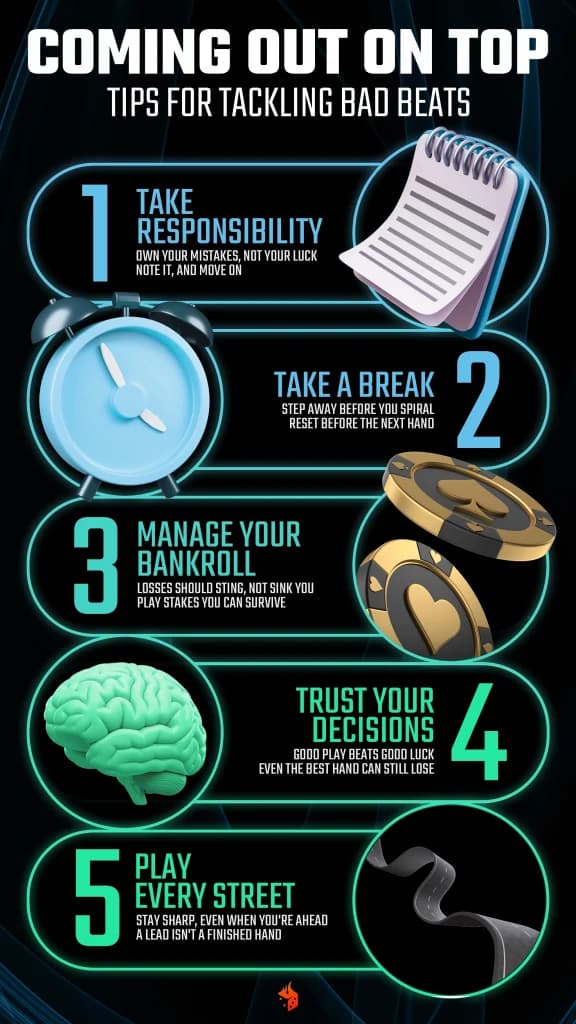
Coming Out on Top: Key Tips for Tackling Bad Beats in Poker
Here are some of the most practical tips for conquering bad beats and prolonging your poker career:
- Take responsibility for your results: While some bad beats are unavoidable, others are the result of your own miscalculations or oversights. When this happens, own it. Recognise where you went wrong and jot it down for future reference. With that said, don’t beat yourself up about it.
- Take a break: After a bad beat, it’s tempting to launch straight into another game to redeem yourself. Fight that impulse. Because your emotions are heightened, you’re more susceptible to tilt, which could prompt you to make poor decisions. Instead, step away from the table, go for a walk, and calm yourself down.
- Manage your bankroll: A single bad beat should never threaten your ability to keep playing. Stick to stakes where a tough loss is a setback, not a disaster. If you’re playing within your means, variance has room to even out over time. If you’re not, one unlucky river can end your session and your bankroll for good.
- Reframe the variance: Instead of seeing bad beats as a disappointment, treat them as proof that you’re getting your money in good. If you consistently make decisions with positive expected value (EV), variance will correct itself over time. Not to mention, this mindset prevents frustration from snowballing into reckless play.
Putting it Into Play
Ready to try your hand at coming out on top in the face of a bad beat? Put your skills into play and check out the Bad Beat Bonus of up to $1,000. There’s no better place to bounce back.