

As Australia heads to its sixth consecutive World Cup, the Socceroos seek to build on past success and reach new heights.
2026 will see them head to the United States, Canada, and Mexico for matches that could become their most exciting campaign in decades.
The 2026 World Cup kicks off on 11 June and runs through to 19 July. But before we get into what to expect this year, it’s important to know how we got here.
A Long Time Between Drinks
Australia’s World Cup debut came in 1974 in West Germany. The team was largely composed of amateurs, and things went about as well as you might expect. They played three group games, lost two, drew the last 0-0 with Chile, and couldn’t score a goal.
It would be 32 years before they showed up for more.
In 2006, a number of high-quality players arrived on the team. They were genuinely able to compete with the best, and players like Tim Cahill, Mark Viduka, Harry Kewell, and Lucas Neill were able to help the Aussies finally qualify once again for the World Cup. Dutch coach Guus Hiddink then led them to one of the great moments in Australian sporting history.
Trailing Japan 1-0 with less than ten minutes left to play in their opening group match, Australia looked tired and likely not able to get over the hump. Then Tim Cahill came off the bench, scored two electrifying goals in the 84th and 89th minutes. John Aloisi added a third in injury time. After three unexpected goals in eight minutes, Australia had managed to score enough goals for their first-ever World Cup win.
The country went berserk.
They then went on to lose to Brazil 2-0 and then draw with Croatia 2-2. This gave them enough points to progress to the round of 16, where they faced a very competitive Italian squad in Kaiserslautern. The Aussies pushed the eventual champions all the way to the brink, only to be eliminated by a controversial penalty in the 95th minute. Lucas Neill went to ground challenging Fabio Grosso, the referee pointed to the spot of the foul, and moments later, the dream was over. Italy went on to win the whole tournament.
The result was heartbreaking, but the Socceroos had truly announced themselves. Football in Australia was never quite the same again after that World Cup.
Good, But Not Great: 2010–2018
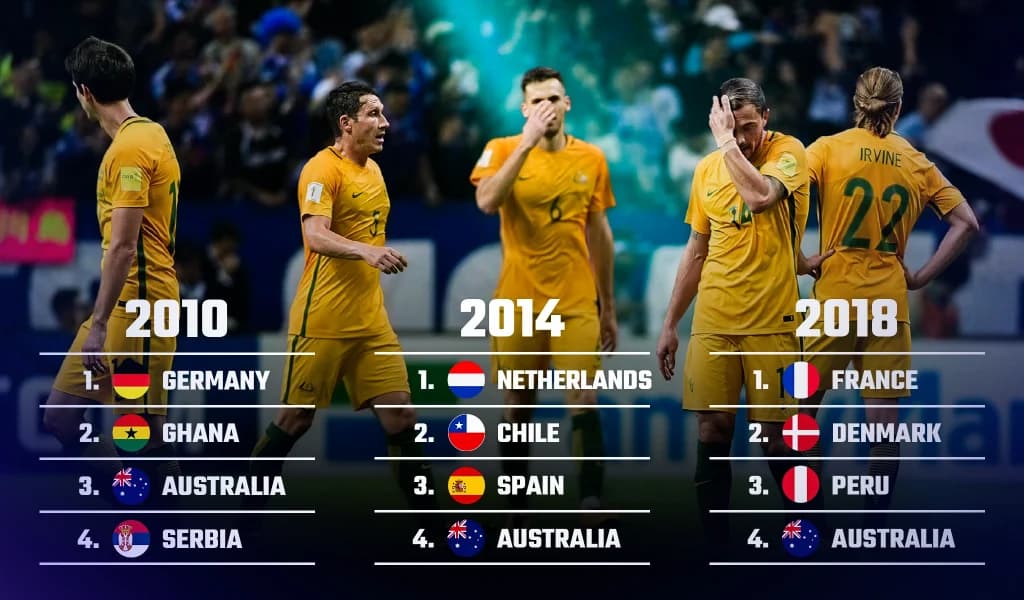
The three tournaments that followed were not quite as inspiring as the 2006 showing. Australia kept qualifying, but couldn’t recapture the magic. A 4-0 beating from Germany in 2010 set the tone for a decade of so-so outings. The Socceroos would pick up points here and there (a draw against Ghana, a win over Serbia, a spirited showing against the Netherlands), but couldn’t string together the results needed to progress.
The 2018 campaign in Russia was a low point. Australia played 22 qualifying matches, which was more than any other team in the world, just to secure their spot. They then went out in the group stage having only earned a single point. It was a grind, and it sometimes felt like the golden era would never return.
Qatar 2022: The Comeback
In Qatar in 2022, something clicked.
After needing a penalty shootout against Peru just to qualify, coach Graham Arnold’s side opened with a 4-1 belting from eventual finalists France. It looked like that year would be more of the same for the Aussies. But then Australia beat both Tunisia and Denmark 1-0. Suddenly, the Socceroos were back in the round of 16 for the first time since 2006.
Their first opponents were Lionel Messi’s Argentina, who went on to win the World Cup. Australia gave them an absolute match, however. Lionel Messi and Julián Álvarez put Argentina 2-0 up before Craig Goodwin pulled one back late, his shot deflecting in off Enzo Fernández for an own goal. Australia pushed hard for an equaliser but fell 2-1.
Why 2026 Feels Different
There are a few reasons to be optimistic about 2026, and it starts with the expanded format. The 2026 World Cup features 48 teams for the first time, divided into 12 groups of four. The top two from each group automatically advance, and the eight best third-placed teams also will move forward. That means underperforming teams can still manage to progress to the new round of 32. For an Aussie side that historically fights hard to get out of groups, having an “extra life” could be significant.
Then there’s the squad itself. Tony Popovic took over as coach in late 2024 and has built a team with respectable defensive capabilities. The Socceroos qualified comfortably for the Cup, finishing second in their AFC group behind Japan, thanks to a 2-1 win over Saudi Arabia in Jeddah. This clinched their spot in June 2025.
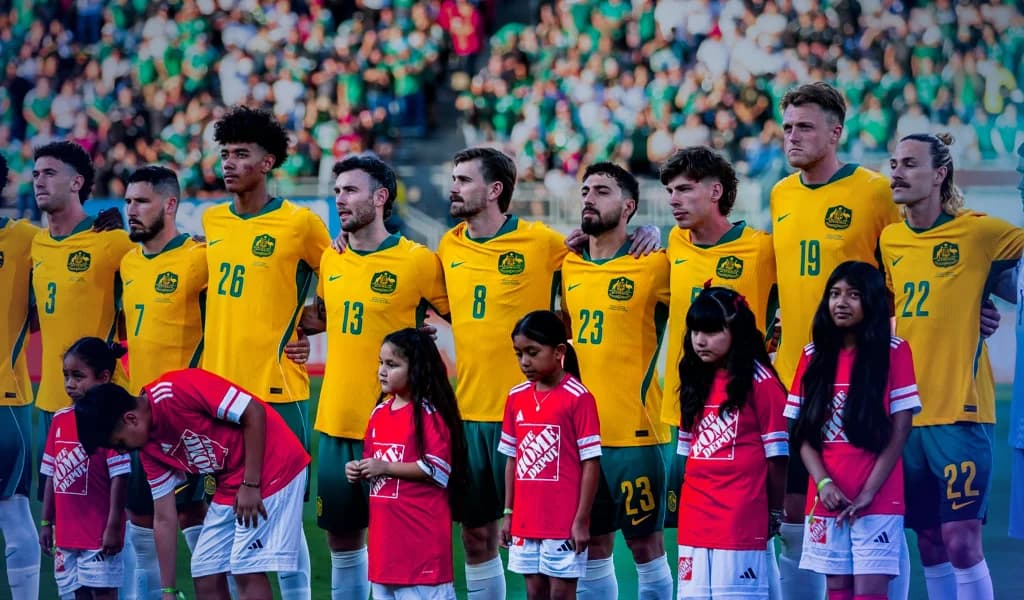
The young talent coming through is genuinely exciting too. Nestory Irankunda, a 20-year-old winger, has earned regular minutes at Watford and looks like he could be a real match-winner at the international level.
Mohamed Toure leads the line at forward with physicality and pace. Finally, veteran goalkeeper Mathew Ryan brings the experience and composure that serious tournament runs are built on.
The Thrill of the Underdog
The World Cup is the one event that pulls everyone in, casuals, die-hards, and the once-every-four-years crowd. Australians lean into it harder than most, because we’ve always backed the underdog, and more often than not that underdog has been us.
The Socceroos have never won the World Cup. They’ve never been favourites. But they’ve given the fans special moments, like Cahill’s goals against Japan, Behich’s run against Argentina, and Aloisi’s shirt-swinging run against Uruguay. Those moments live in memory long after the tournament ends. That’s what tournament football does, and it’s why the whole world stops to watch.
Group D – Australia, the United States, Paraguay, and Türkiye
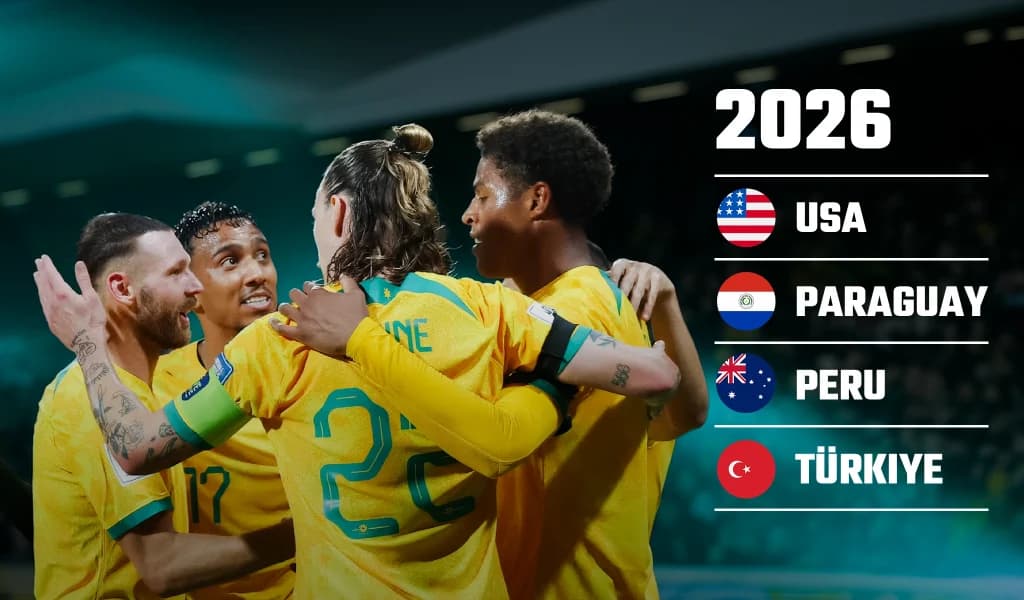
Australia landed a challenging but winnable Group D draw. They opened strong against Türkiye in Vancouver on 13 June, then will face the United States in Seattle on 19 June. The match against the Americans will be a major contest, then the Socceroos close out the group against Paraguay in Santa Clara on 25 June.
Three matches, three chances to make some noise. On paper it’s tough, but the Socceroos are at their best when no one’s picking them.
Want to keep the World Cup fun going? Check out the Ignition World Cup Poker Series!