
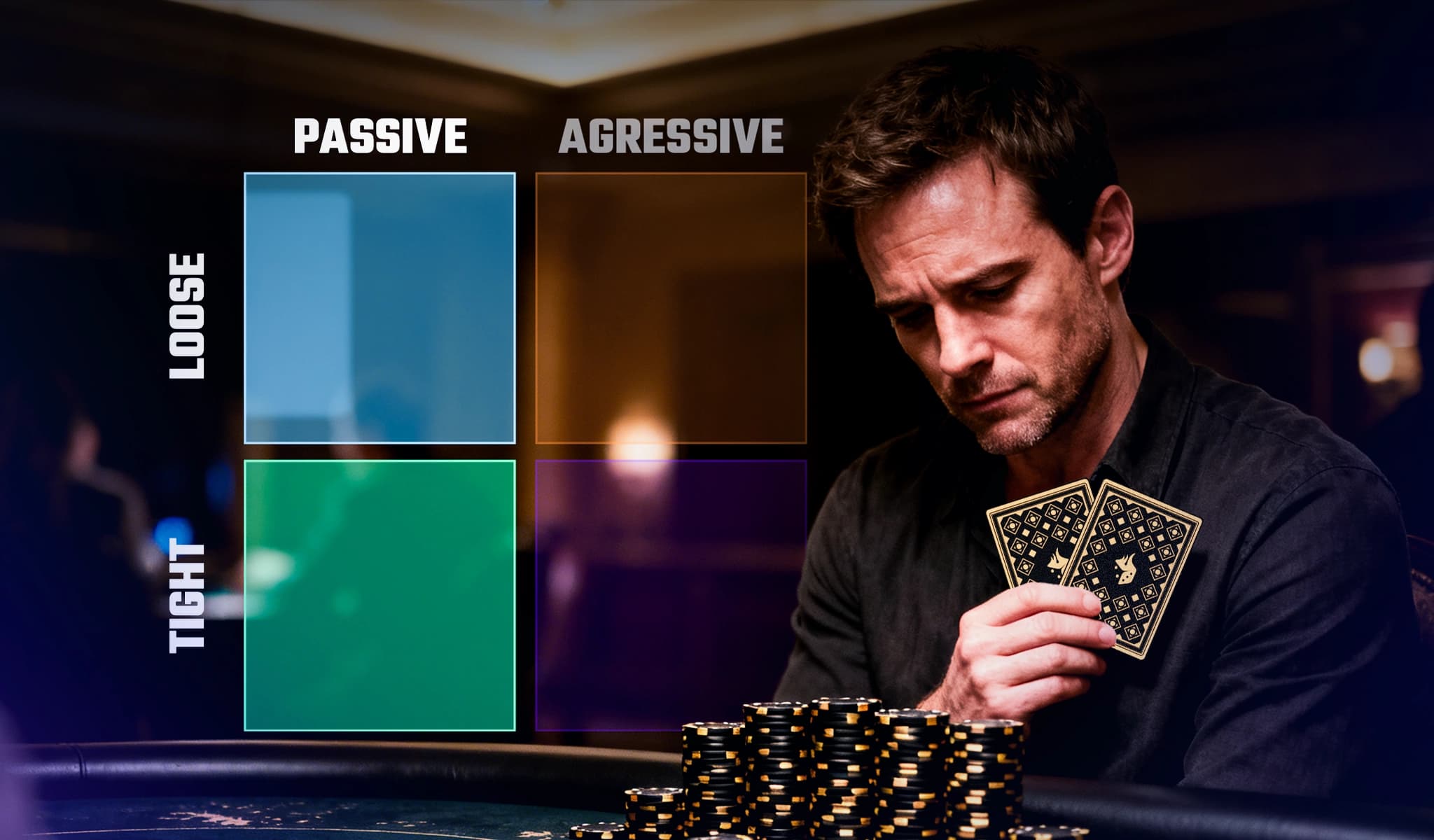
On the felt, you’ll face many types of poker players. One of the most common: passive players.
Known for being submissive, passive poker players are often seen as easy to beat. That’s because they let others dictate the game, following their lead rather than making their own moves.
With that said, passive players aren’t simple-minded pushovers. To trump them, you need to have airtight poker techniques tailored to their unique styles.
In this guide, you’ll learn about six of these tactics. By working these into your poker strategy, you’ll be better prepared to defeat passive players and collect their chips.
1. Understand the Different Types of Passive Players
To outsmart passive players, you need to be able to spot them. With that said, not all passive players are created equal, and different types of players have different tendencies.
There are two main types of passive poker players: tight-passive and loose-passive. Explore the key traits and tendencies of these players so you know exactly how to spot them.
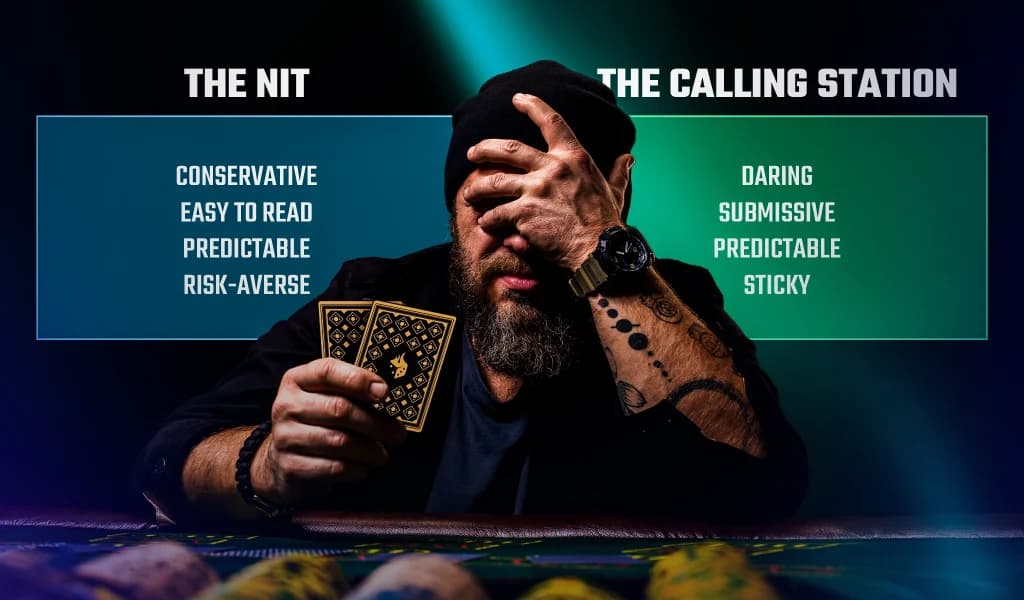
The Tight-Passive Player (aka “The Nit”)
Tight-passive players are extremely selective about the hands they play. In general, they’ll only stay in the game if they’ve got high-quality starting hands, such as A-K. Highly cautious, they’ll usually fold pre- or post-flop if they don’t have the goods, especially when pressured by opponents. As a result, they generally don’t win big pots.
Key characteristics:
- Conservative
- Easy to read
- Predictable
- Risk-averse
The Loose-Passive Player (aka “The Calling Station”)
More adventurous in nature, loose-passive players play many hands, even weak or mid-strength ones, just to see what happens. In general, they stay in the game by continuously calling, which is where the nickname “calling station” comes from.
While their behaviours may be different, loose-passive players are creatures of habit, just like nits. As a result, they’re just as easy to exploit; you’ll just need to switch up your tactics.
Key characteristics:
- Daring
- Submissive
- Predictable
- Sticky
2. Embrace the Power of Positional Play
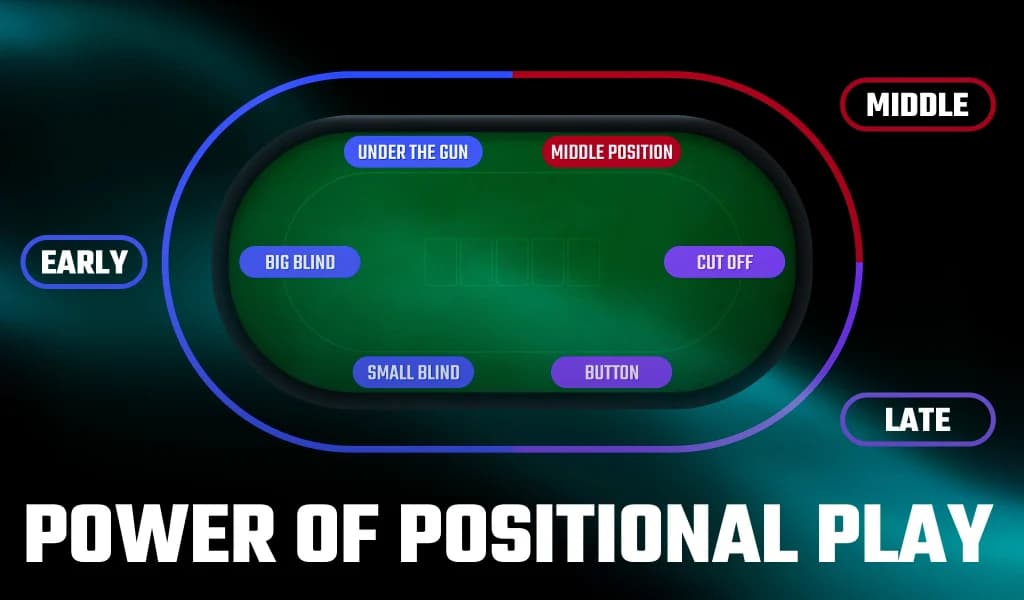
In poker, position is everything. So, it’s crucial to understand and use it to your advantage.
The golden rule is this: the later your position, the greater your competitive edge.
When you bet last, you get to see how everyone else bets first. You can then use that information to guide your bet decision to call or raise, as well as your bet size. These details are extremely helpful in exploiting passive players. For example, when it’s nearly your turn and quiet players are holding back, a well-placed raise can lead them to fold. That leaves you to collect their blinds easily.
On the other hand, if you bet first, you have to make those decisions on your own. With that said, you can still control the game.
Say you’re in an early position with a good-but-not-great hand, such as K-10 offsuit. You might raise, prompting a tight-passive player to call. As the game progresses, the board may come up dry. This is when the community cards don’t complement each other enough to form premium hands like flushes or straight draws. In this scenario, a small continuation bet (C-bet) can still win you the pot. By betting first, you’ll set the tone and make tight-passive players think twice about moving forward.
Regardless of where you’re sitting, playing in position puts you in control. It ensures you’re not just playing the cards; you’re playing the players.
3. Bluff — But Only When the Time is Right
Bluffing is one of the top poker techniques. And it’s especially effective for exploiting passive players, but only when used correctly.
In general, you should reserve bluffing for tight-passive players. As mentioned previously, these players are incredibly averse to risk and pressure. If they think for a second that you have the goods to beat them, they’ll bow out.
When you’re on the button (i.e. in the dealer’s position and betting last), don’t be afraid to raise pre-flop. Odds are, your immediate confidence will spook them into folding. Then, you’ll get to collect the blinds without a fight.
With that in mind, it’s not enough to bluff; you need to do it convincingly and strategically. Think of bluffing as storytelling. Tight-passive players are only going to fold if the bluff feels real. To make the move appear genuine, keep your bet sizing and timing consistent. If your actions match what you’d normally do, it will be much easier for your opponents to believe you.

4. Set Traps
With timid players, there’s one moment you need to watch out for: the moment they start loosening up.
The signs are often subtle; maybe they start calling more or showing signs of curiosity in the pot. This shift usually means they’ve convinced themselves that it’s safe to experiment a bit.
That’s your opportunity to set a trap.
With a strong hand, instead of pouring into the pot, take a different approach. Place a smaller, less intimidating bet or even check. This will make your opponents feel safe — and when they feel safe, they’re likelier to stay in the mix.
As the hand progresses, keep the door open. Continue placing cautious bets or checking to ensure these passive players feel comfortable. If you do this correctly, you’ll get them to stick around until the very end. That’s when you can reveal the strength of your hand and, hopefully, come out on top.
Think of it as a reverse bluff. Instead of convincing your opponents that your hand is better, you’re convincing them that it’s worse. This lures them into thinking they’ve got the upper hand and making betting decisions to your benefit.

5. Make the Most of Thin Value Bets
Remember how loose-passive players are known as calling stations? Value-betting is a great way to exploit these opponents.
That’s because calling is their default, even when their own hand isn’t strong. With that in mind, you can safely value-bet with even moderate hands. So, if you have something like a basic top pair, place a well-sized value bet to keep those loose-passive players involved.
Although you may not score a huge pot, these small and strategic value bets can add up. In most cases, loose-passive players are stuck in their ways; they’ll keep calling with weaker hands. And every extra chip they wager could go straight to your stack.
6. Know When to Fold
One of the most underrated poker techniques is knowing when to walk away. And this skill is just as crucial when facing passive players as it is with aggressive players.
Typically, passive players don’t bluff. They’re also hesitant to raise if they don’t have the goods to back it up. So, if a tight-passive or loose-passive opponent suddenly places a big bet, especially on the turn or river, take it as a warning. Instead of trying to take them on, bow out immediately to minimise your losses.
At first, sacrificing your stake may feel like a hard pill to swallow. But in most cases, you’ll end up saving yourself money in the long run. Plus, you’ll deny those passive players the satisfaction of winning an even bigger pot.
This tactic is an important reminder: outsmarting passive players isn’t just about winning hands. It’s also about nipping their traps in the bud and limiting the damage they can do to you.
Put Your Poker Techniques to the Test
With these six poker tricks in your arsenal, you’ll be better equipped against passive players. Whether you’re facing off with a tight-passive or loose-passive opponent, you’ll have the knowledge to exploit their weaknesses. From there, the only thing left to do is collect their chips.
To put your skills into practice, play now at Ignition Poker. With a wide range of games, tournaments, and bonuses on offer, you’re sure to find something that suits your style. Plus, features like mobile gaming and crypto payments mean you’ll be on the cutting edge of online poker.