

It’s official: the 2026 Formula 1 season has begun—and the Australia GP curse continues.
The Australian Grand Prix took place on Sunday, 8 March, officially marking the start of the 2026 F1 season.
With the season underway, there’s no better time to revisit the Australian Grand Prix — its history, evolution, and how it’s serving as a launch pad for the 2026 season (plus, what happened with Piastri?).
The History of the Australian Grand Prix
1985–1995: The Adelaide Era
For the Australian motorsport scene, 1985 was a huge year.
In the early 1980s, F1 boss Bernie Ecclestone was on the hunt for a new city to add to the grand prix roster. Eager to expand beyond Europe, he started looking in the Asia-Pacific region. Before long, his eyes were set on Australia.
In 1985, the Australian Grand Prix was officially added to the F1 World Championship roster. With this change, Australia had secured its very own spot on the most elite motorsport stage in the world.
But what many people forget is that the race wasn’t always hosted in Melbourne.
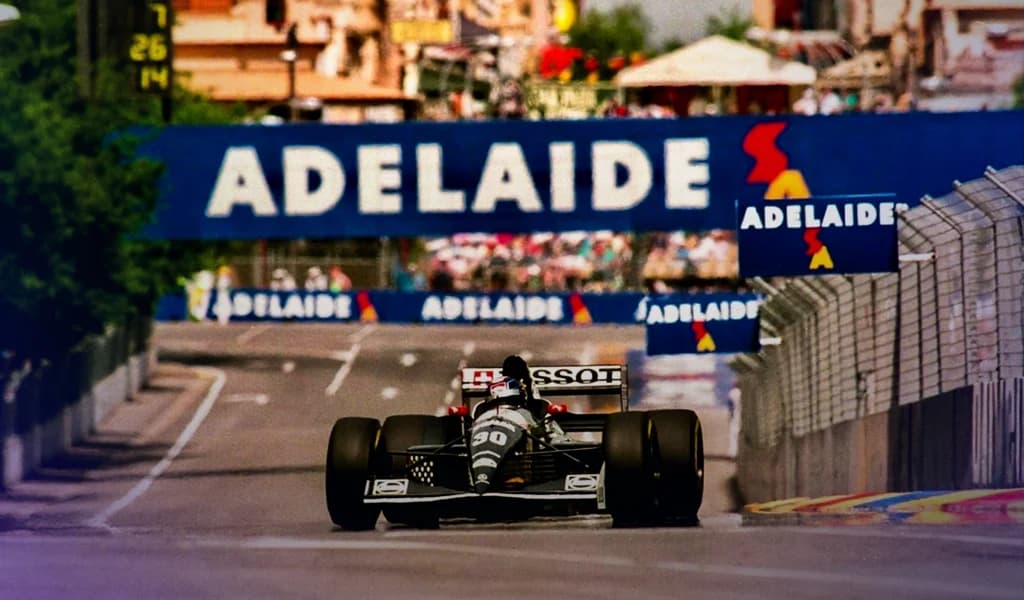
For the first 11 years, the Australian Grand Prix was held in the South Australian capital of Adelaide. Running through the city centre, the Adelaide Street Circuit featured tight turns and technical sections.
During its run, the Adelaide Grand Prix became a favourite among drivers. Some enjoyed the technical challenge of the street circuit, while others valued its position as the final race of the season. This grand prix was the culmination of all their hard work, after which they could relax and celebrate.
The event also saw some unforgettable moments in F1 history. In 1993, motorsport legend Ayrton Senna won his final Grand Prix in Adelaide. Less than six months later, Senna died following a crash at the 1994 San Marino Grand Prix.
Not long after, Adelaide’s chapter in F1 racing came to a close, with the race set to move to Melbourne.
According to journalist Adrian Musolino, Senna’s death marked the end of an era in more ways than one: “Senna died in 1994 and, by that time, Adelaide already knew it had lost the event to Melbourne, his passing almost seemed to represent a generational shift in Formula One that coincided with the move away from Adelaide.”
1996–present: Making Waves in Melbourne
For the last 30 years, the Australian Grand Prix has been hosted at the Albert Park Circuit in Melbourne.
The new location brought about many other changes. The move also changed its place on the calendar. Instead of being the last race of the season, the Australian Grand Prix became the first.
Plus, the course offers different challenges. While Adelaide’s circuit was known for its tight turns, Melbourne’s is often bumpy and slippery. A well-sorted chassis is also a must at Albert Park. Many spots require the drivers to be reactive on the front end and throw their cars into a corner.
The event has thrived in Melbourne. Bustling, vibrant, and scenic, the city serves as an ideal race backdrop. Its residents are avid sports fans who embrace the event with open arms. Across the city, you’ll find locals packed into pubs, bars, and restaurants to watch the action unfold in real time.
Attendance continues to grow each year. The 2026 Australian Grand Prix broke records, with 483,934 people in attendance throughout the weekend.
Hall of Fame: The Australian Grand Prix’s Most Memorable Winners
Next, get to know some of the most iconic drivers who secured the top spot on the podium at the Australian Grand Prix:
Michael Schumacher
With four wins under his belt, Michael Schumacher has had the most success at the Australian Grand Prix of any F1 driver.
Racing for Ferrari, Schumacher won the race in 2000, 2001, 2002, and 2004. Despite losing to McLaren’s David Coulthard in 2003, Schumacher used these initial victories as a launch pad for the rest of the season. From 2000–2004, he won five World Drivers’ Championships in a row. To this day, he remains the only driver to hold this consecutive feat.
Jenson Button
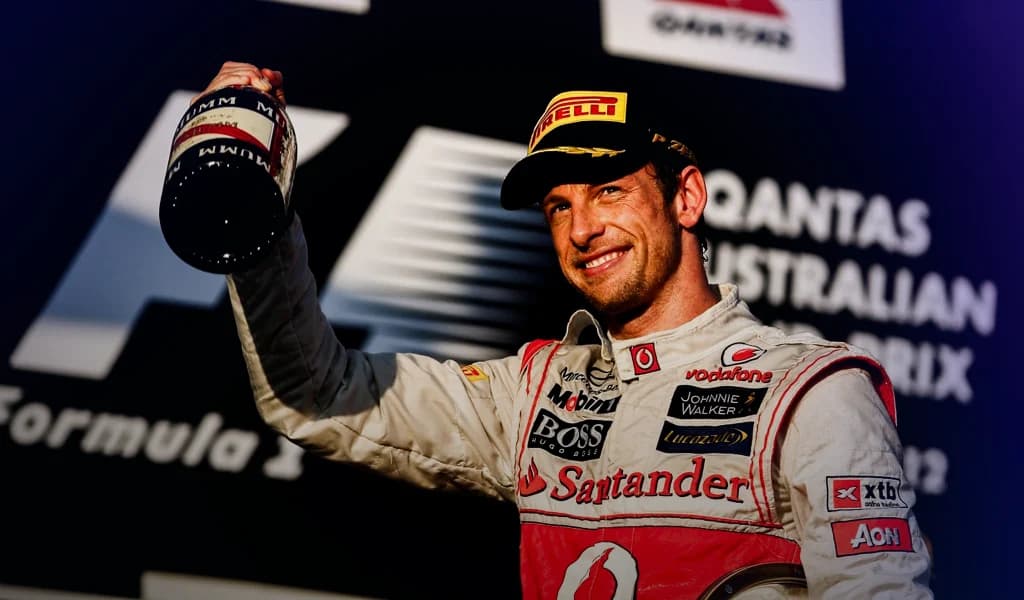
Holding three Australian Grand Prix titles, British driver Jenson Button is another standout in the event’s history.
While he won 2009, 2010, and 2012, the latter race was particularly memorable. Button was in top form, dominating the track and leaving his competitors in the dust. These opponents included Red Bull Racing’s Sebastian Vettel and Button’s McLaren teammate Lewis Hamilton. These drivers finished second and third, respectively, while Aussie Mark Webber clinched the fourth spot.
After a strong start, Button sailed into a 10-second lead. By all accounts, it looked like he was going to win the grand prix handily. But when the safety car emerged on lap 37, it meant that Button was going to lose that gap. Fortunately, he managed to hold onto his lead and clinch the win.
“Thanks, guys,” he said after crossing the line. “The car was beautiful and too quick.”
Sebastian Vettel
One of Button’s top adversaries, Sebastian Vettel, has also had his fair share of success at the Australian Grand Prix. Like Button, he’s won the race three times: in 2011, 2017, and 2018.
The 2011 event saw Vettel command the circuit and win by over 22 seconds. With that said, his back-to-back victories in 2017 and 2018 were nothing to scoff at. The back-to-back wins marked the beginning of a competitive edge for Ferrari over its longtime rival, Mercedes. It also marked Ferrari’s first win in Australia in 20 years.
Best of all, the German racer was able to keep the momentum going the following year.
Recent Winners
The last few years have been a mixed bag at the Australian Grand Prix, with a range of drivers coming out on top:
- 2022: Charles Leclerc — Ferrari
- 2023: Max Verstappen — Red Bull Racing
- 2024: Carlos Sainz — Ferrari
- 2025: Lando Norris — McLaren
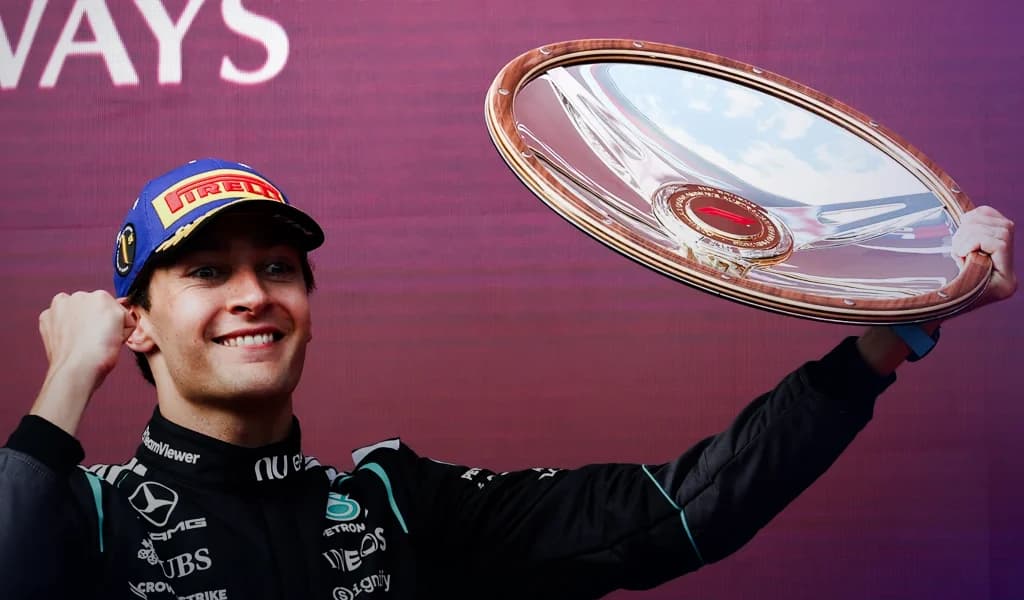
- 2026: George Russell — Mercedes
As of now, no Australian drivers have won their home race. While there were hopes that McLaren driver Oscar Piastri would change that, the 2026 season has kicked off unexpectedly for the Aussie driver.
The 2026 F1 Season: Pre & Post-Race Breakdown
As the first race of the year, the Australian Grand Prix sets the tone for the rest of the season. And it’s safe to say that audiences’ expectations have shifted following the event.
Expectations Going Into The Race
After a dual victory last year, all eyes were on McLaren heading into the inaugural race of 2026. People were particularly focused on the cool, calm, and collected Oscar Piastri.
At just 24 years old, the highly skilled driver has made his mark on F1—and he’s had his sights set on his home race for a while. Despite finishing fifth in the qualifying round, hopes remained high that the Aussie would be able to move up the ranks on race day.
With that said, the standout qualifiers were Mercedes, with George Russell in pole position and Kimi Antonelli in second.
But the biggest shock of all? Four-time champion Max Verstappen starting in 20th. After suffering a high-speed crash in Q1, Verstappen was forced to the back of the starting lineup.
What’s Next?
The 2026 Australian Grand Prix met some expectations, while completely defying others.
One expectation that panned out was Mercedes’ strong finish. Despite a touch-and-go battle with Ferrari’s Charles Leclerc, Russell managed to cling to first place. Meanwhile, Antonelli started his second F1 season on an epic note by coming in second place.
Despite putting up a brilliant fight, Leclerc couldn’t quite score a victory this time. Fortunately, he did round out the podium at third place.
But without a doubt, the grand prix’s biggest upset was Oscar Piastri. While he initially qualified fifth, Piastri didn’t get to compete due to a crash on his reconnaissance lap. His car suffered damage so significant that Piastri couldn’t make it to the start line.
The development was devastating, not only for Piastri but for Aussie fans.
“A scenario like that just shouldn’t happen, so it’s obviously very disappointing,” he said to the press afterwards.
As for Verstappen, the Dutchman pulled out an impressive performance, moving up 14 places to finish in sixth.
Charting the Next Chapter of F1 in Australia
From its Adelaide roots to Melbourne’s modern spectacles, the Australian Grand Prix has come a long way. The event continues to grow in scale and influence.
With record crowds and a growing influence on each season, F1 Australia is entering its most defining era yet. Be sure to follow the action on Ignition!