
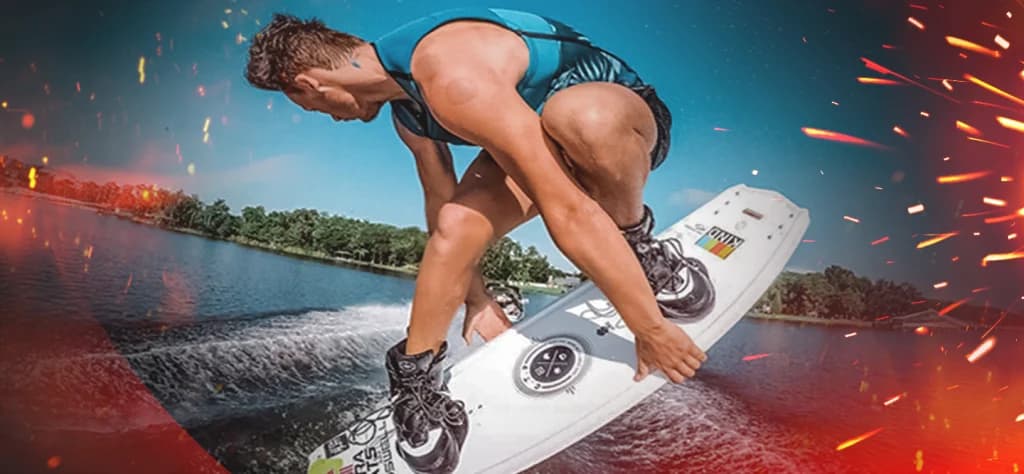
By Cory Teunissen
What does resilience mean for a career in extreme sports? It’s a word that gets thrown around a lot, but it takes on a new meaning after you’ve faced down years of challenges yourself.
When you’ve stood in the middle of the storms and found a way to keep moving; when you’ve had injuries that should have ended seasons; and when you’ve faced moments that have shaken you to your core more than any fall on the water ever could, you learn a thing or two about resilience.
A fifteen-year career in professional wakeboarding doesn’t happen by luck alone. It’s the result of stubborn belief, a strong support crew, and above all else a refusal to give up, no matter how hard the situation gets.
Early Days And The Challenge of Competing in Extreme Sports
I grew up out by Somerset Dam, northwest of Brisbane, where the water felt like a second home. I started waterskiing when I was only three years old and wakeboarded for the first time at five.
Most kids have memories of playgrounds or sandpits. Mine are of early mornings on the water, my family cheering me on, and the feeling of discovering something I truly loved.
I didn’t know it then, but those early years planted the first seeds of resilience. Whenever I fell, I learned to get back up. Whenever something scared me, I learned to lean into it. And whenever a challenge came, I learned to push through it because the reward always felt worth it.
As I grew older and started competing, that early love for the sport carried me through the nerves and the pressure. I loved the challenge, I loved the grind, and I loved the feeling of making progress every time I rode.
But as my career took off, resilience stopped being something I learned on the water and became something life started to teach me in much deeper ways.
Overcoming Physical Challenges And Setbacks
One of the first major tests came when I blew out my labrum. My shoulder started dislocating once every week or two. Most people hear that and ask how I even managed day to day life, let alone riding. The truth is that every time it popped out, I would put it back in, reset, and keep going.
It was painful, it was frustrating and it would’ve been very easy to take time off or step away. But something inside me wasn’t willing to give up momentum.
I kept competing on tour. I kept pushing through the discomfort because I wanted to prove to myself that my mind was stronger than the limits my body was trying to impose.
That season, I won the tour. Looking back, that victory was not really about the trophy. It was about proving that resilience can carry you further than talent alone ever will.
It showed me that when things go wrong, you can either let the world slow you down or you can choose to rise above it. I chose to rise, and that choice changed the trajectory of my career in extreme sports
Coping with Personal Loss
There’s more than physical pain out there. During the early days of COVID, I lost one of my best friends. Borders were closed and flights were restricted. I couldn’t get home for the funeral.
It was one of the hardest moments of my life. Everything in me wanted to be home with the people who understood that loss. Instead, I was on the other side of the world trying to process it alone.
There’s no mindset training, physical conditioning, or technical skills to help you handle grief. It tests you in ways you can’t prepare for, stripping you to your core. That year, I learned resilience isn’t just about pushing through physical challenges or performing under pressure. It’s also about finding a way to keep going when your heart is heavy.
I carried that loss into ever ride and somehow, through it all, I won the championship again. It wasn’t a joyful win, but it was a proud one — a reminder that even in your darkest moments, the people you love stay with you.
Lessons from Family Strength
Just when I felt like life had given me enough challenges, another one arrived the following year. My mum was diagnosed with breast cancer. Hearing that news hit me harder than any injury ever could.
Suddenly nothing else mattered. The competitions, the training and the travel all felt tiny compared to what my mum was facing. She battled through everything that came her way with a strength that inspired me more than she will ever know.
And she won.
Seeing her beat cancer gave me a new understanding of what real resilience looks like. It reminded me that the people who stand behind me are the real reason I am able to push as hard as I do in my career.
Her fight gave me motivation and perspective, and once again, through all the personal noise and emotional weight, I went on to win the tour championship that year.
Overcoming Major Physical Injury
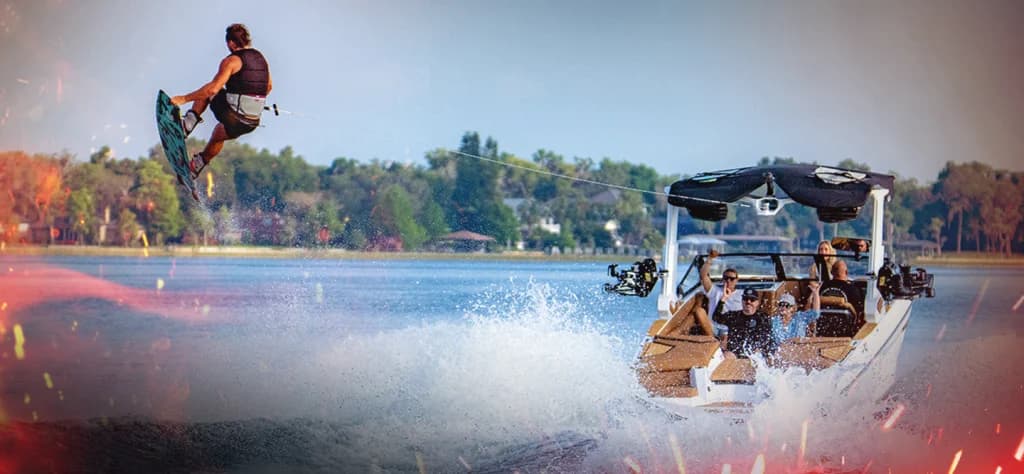
A couple of years later I faced yet another physical setback. During the Hyperlite team shoot, I snapped my ankle. It was the type of injury that should have halted my entire season.
Most athletes would have accepted that the year was done. But something in me refused to give in. I rode the entire tour on that injury. Every session hurt. Every landing felt like it might undo me.
But I stayed focused on one thing. I wanted to prove that this was not going to be the moment that stopped me. I wanted to finish what I started.
And that year, I won the tour championship again.
Reflections on Resilience
When I look back on all of these moments, it still surprises me how much the toughest seasons of my life also became the seasons that defined my career the most. Every major challenge came with pain or heartbreak or fear or uncertainty.
But every time, it also revealed something new about who I am. It showed me what I value, what I am willing to fight through and what kind of extreme sports athlete and person I want to be.
Resilience taught me a lot about myself, but it also taught me even more about my support crew. You learn very quickly who the real ones are when life becomes heavy.
The people who pick you up when you are broken. The ones who remind you of your purpose when you are doubting yourself. The ones who show up in quiet ways that make all the difference.
My family, my friends, my team, my partner and everyone who has believed in me has been part of every victory. Their support is the reason I have been able to keep pushing for fifteen years in pro wakeboarding.
What Is Resilience In Extreme Sports?
Resilience is not just physical toughness. It’s emotional endurance and mental clarity. It’s that combination of discipline, belief and a willingness to keep showing up even when everything feels impossible.
It is understanding that your career does not move in a straight line, that it’s filled with highs that lift you and lows that shape you. It’s the story of every fall and every recovery. It is the quiet moments that no one sees, where you decide whether you will give in or keep going.
Fifteen years in this sport has taught me that resilience is the foundation of longevity. Talent gets you started. Passion keeps you excited. But resilience is what keeps you alive in the game. It is what allows you to grow with the sport as it evolves. It is what allows you to navigate injuries, personal struggles and all the unpredictable things life throws your way.
Continuing the Journey
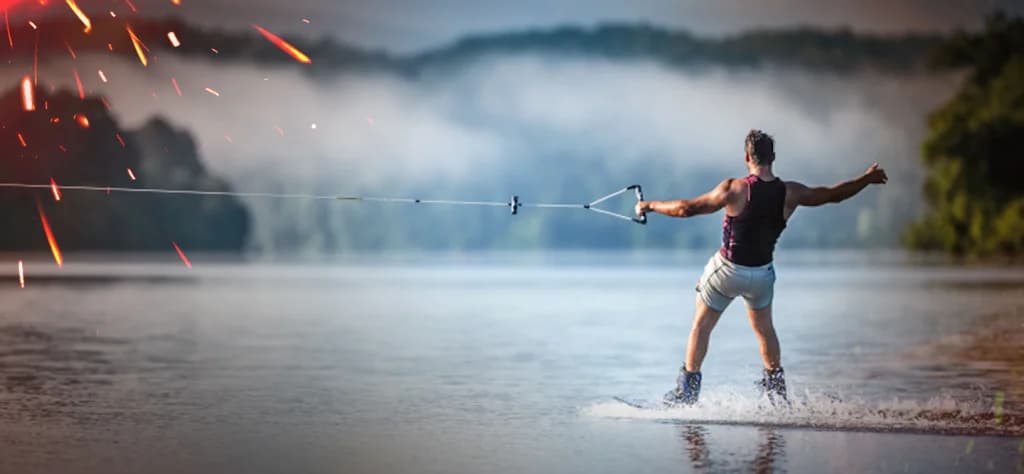
When I look at my journey from a kid on Somerset Dam to a multi year tour champion, the story that stands out is not one of perfection. It’s a story of getting back up, of refusing to fold — a story built on resilience that was tested again and again and made stronger every single time.
And the amazing thing is that I am still learning! I am still growing. I am still finding new levels of myself. Resilience is not something you master once. It is something you build your entire life.
Fifteen years deep, I am proud of the athlete and the person I have become. And I know the next chapter will bring its own challenges and its own opportunities to rise again.
Cory Teunissen is a five-time world champion wakeboarder who first made a splash at age 15 when he became the youngest person ever to land a Switch Toeside Wake to Wake 1080. Since going pro in 2015, Cory’s made a name for himself as an elite athlete always pushing the boundaries of what’s possible in extreme sports.